Beware of young architects
At four years old, our family moved into a house designed by my uncle: a young architect. The price was right, but in return he had complete creative control: the design, materials, construction. It was—is—spectacular: redwood siding complementing the surrounding trees, huge sections of glass, and canopy roofs that kept you guessing what was inside and what was outside. Rooms with ceilings two and half stories high with everything going up like, well, trees.
Another thing that went up was heat.
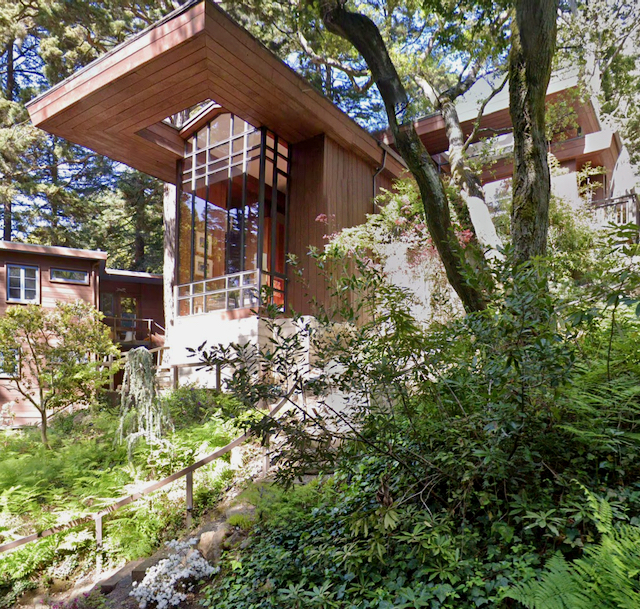
Remulac has a colder climate than Larry Lane. Heating is a concern, and even more so now with the price of gas, questions about the gas supply, and gas’s contribution to global warming. France is making a big push for “all electric” including heat pumps for home heating. If our boiler dies, we’ll most likely install a heat pump. One concern, however, is our conventional radiators. Heat pumps work best by heating water to lower temperatures and spreading out the radiating surface. Optimum seems to be radiant floor heat. Remulac would be hard to retrofit: we have a fair amount of terra cotta tile laid on concrete. Don’t want to tear that up.
Which got me thinking about Larry Lane: lots of terra cotta tile laid on (lots of!) concrete.
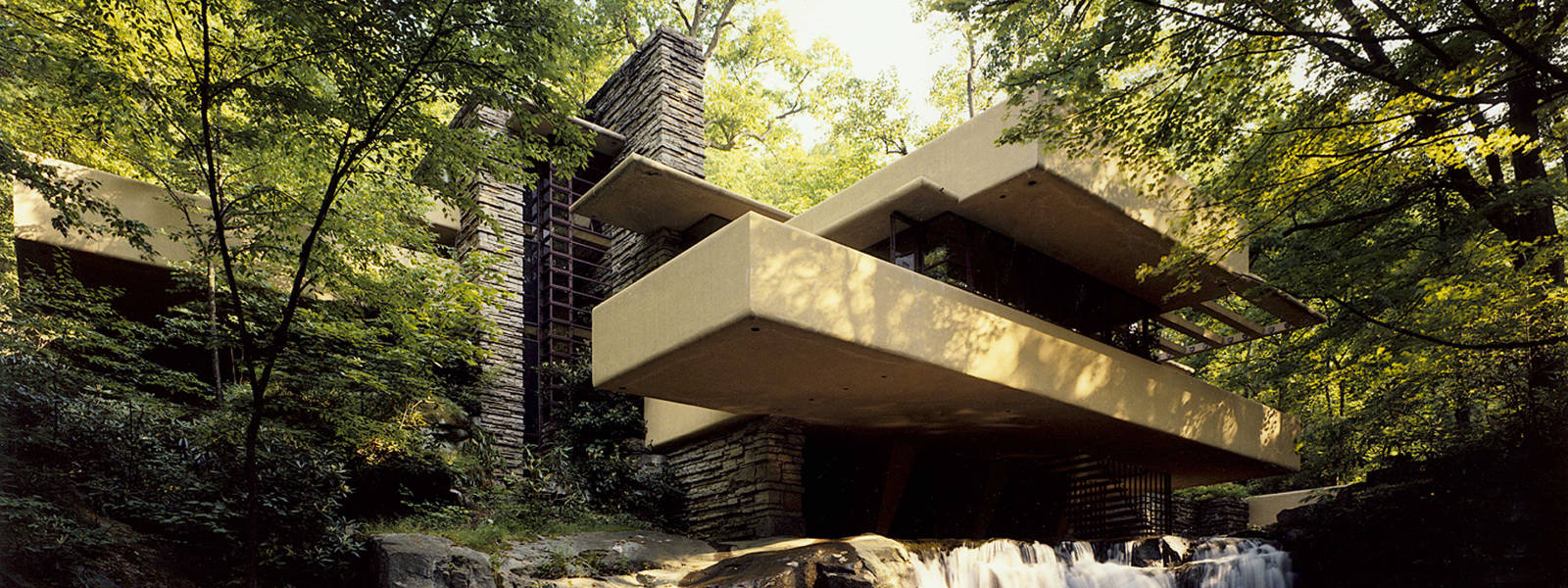
Thank goodness that architects stand on the shoulders of those who came before them. Imagine young architects reinventing everything and rediscovering all the things that could go wrong. Reece—the Larry Lane architect—was influenced by (citation needed) Bernard Maybeck and Frank Lloyd Wright. Find the roof angle, the concrete, and the rough timber shared between Larry Lane and the First Church of Christ, Scientist - Maybeck. If you can’t have a river running through it (Fallingwater - Wright), then settle for trees.

Ahead of his time, but out of his element
Reece not only conceived (of?) the Larry Lane space (“space”—so last century), but also radiant floor heat. In 1957! With gas, and with concrete, and with (big, fat, red) terra cotta tiles!
As far as I know, Reece did not take courses in HVAC (Heating, Ventilation, and Cooling). But here is the genius: when you pour the concrete slab for the floor, place 2x4’s embedded on top of the mix to create canals in the slab extending out in every direction (remove them before the concrete completely hardens!). When the tile is laid on top, channels through which hot air can be pushed are created. The channels converge at a large duct coming up from the forced air furnace. At the far end of each channel is a vent—that can cleverly be opened or closed—where the previously heated air escapes into the room. Hot air to heat the tiles and then hot air blowing into the room!
Beautiful wood, inside/outside glass, trees growing through it, towering ceilings, natural and rustic tile, heritage of great architects, and radiant heat naturally embedded in the concrete construction.
How much gas do you think it takes to heat huge concrete slabs and the earth underneath to the point where the tiles begin to give off warmth? How warm is the (“previously heated”) air that comes out of those vents? How high are those ceilings? And how warm is the air two and half stories up compared to the air down at ground level? How much heat gets transferred through those curtains of single pane glass?
The Fireplace
Most likely not because he was worried about the radiant heating system’s capacity, Reece put a huge fireplace in the center of the large living/dinning room. It was open on three sides so everyone would get heat. The black metal and exposed chimney climbed to the roof, providing plenty of surface area to radiate heat.
For reasons never completely understood, the chimney seemed to operate in reverse. Instead of hot air rising through it, heating it and the surrounding room, while perpetuating an updraft; we got a demonstration that everything in physics (except time) can be run backwards.
The cold chimney created a downdraft, drawing in more cold air from outside. This cooled the room and the chimney, accelerating the downdraft, and of course, blowing the smoke out from under the hood into the room. Fortunately the room was large and so could absorb quite a bit of smoke before it reached ground level. We could also open the kids’ bedroom doors and windows (up one level) to evacuate the smoke and provide a special treat for a good night’s sleep.
The draft could be reversed with a fair amount of effort, wood, and faith. After 40 minutes, the smoke would stop pouring into the room and sitting right next to the fireplace would actually create a sensation of warmth.
To build a fire was, then, a major decision to make. The only assured fire was Christmas morning.
The Tiles
Oakland has a mild climate, especially in winter. Let us give thanks. When it did get cold, we cranked up the heat. Otherwise, it was sort of “What’s the point?”
Strangely enough, there was a point: “The Tiles” (as far as I can remember, that’s what this special place was called). That “large duct” mentioned above: It blasted hot air under some 20 square feet of floor area where the distribution channels started: 20 square feet of very warm/hot tiles. Time for a nap? Go lie down on the tiles. In from playing hard in the rain? Go lie down on the tiles. Dog needs a place to lie down? The tiles. Yes, Gus sniffed out this spot right away and you could not keep him off of it. He even had some sort of a cushion to lie on .. because tiles are hard, and in this spot they get too hot!
Radiant heat in a huge house and we were condemned to huddling over and on 20 square feet of tile. But it was so nice.